1. Check the Load Chain Before Use
The load chain carries the full lifting force, so chain inspection is the first step in chain hoist maintenance. Look for deformation, cracks, corrosion, heavy wear, twisted links or rough movement. Pull the hand chain slowly and confirm the load chain runs smoothly through the chain wheel.
- Reject chains with stretched or twisted links.
- Clean off dust, mud and metal chips before operation.
- Do not weld, heat or manually reshape damaged chain links.

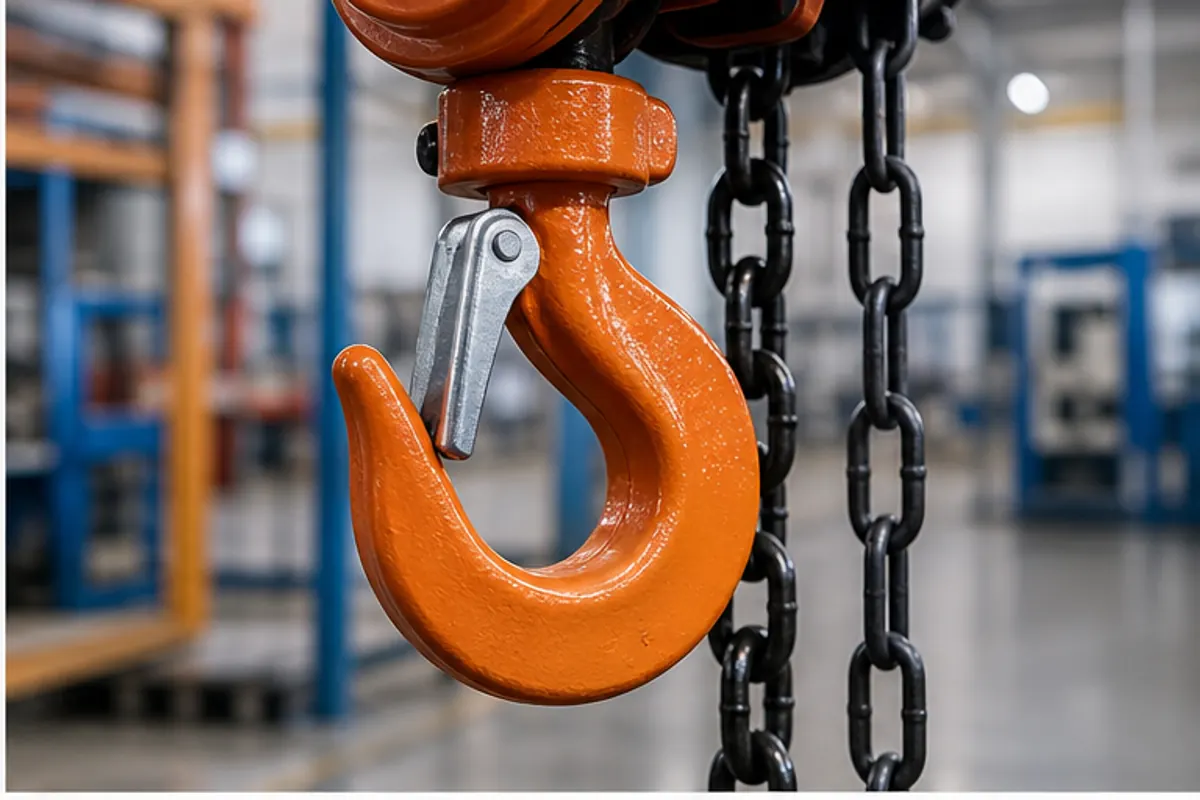
2. Inspect the Hooks and Safety Latches
Check both upper and lower hooks. The hook body should not be bent, cracked or visibly opened. The safety latch should return by spring force and close the hook throat correctly. If the hook opening has expanded or the latch no longer works, the hoist should be removed from service.
- Confirm the hook rotates normally.
- Make sure the safety latch is not missing or stuck.
- Do not side-load the hook tip.
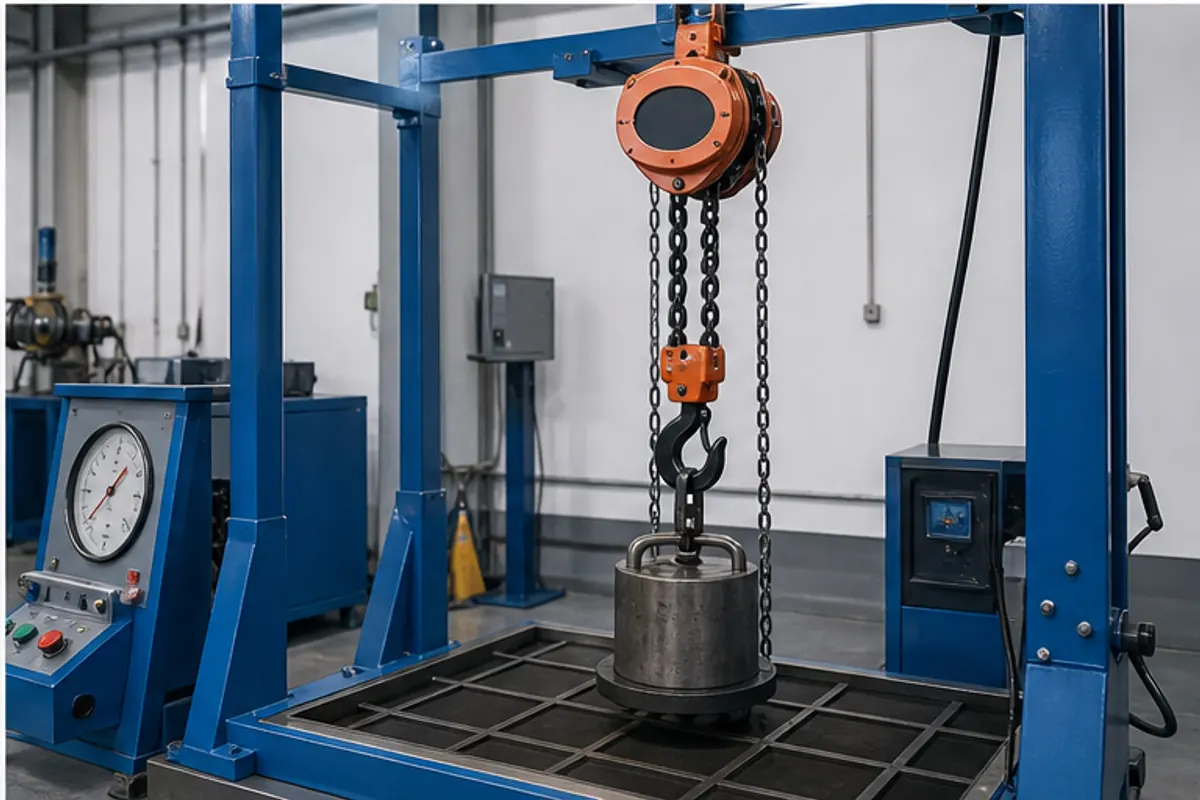
3. Test the Brake System
The brake system is the safety core of a manual chain hoist or lever hoist. Before lifting a real load, make a light-load test. Raise the load slightly, stop pulling and confirm the hoist holds the load without slipping. Lower it slowly and listen for abnormal noise.
- Test under light load before regular work.
- Stop immediately if the load drifts down.
- Keep friction parts away from oil contamination.
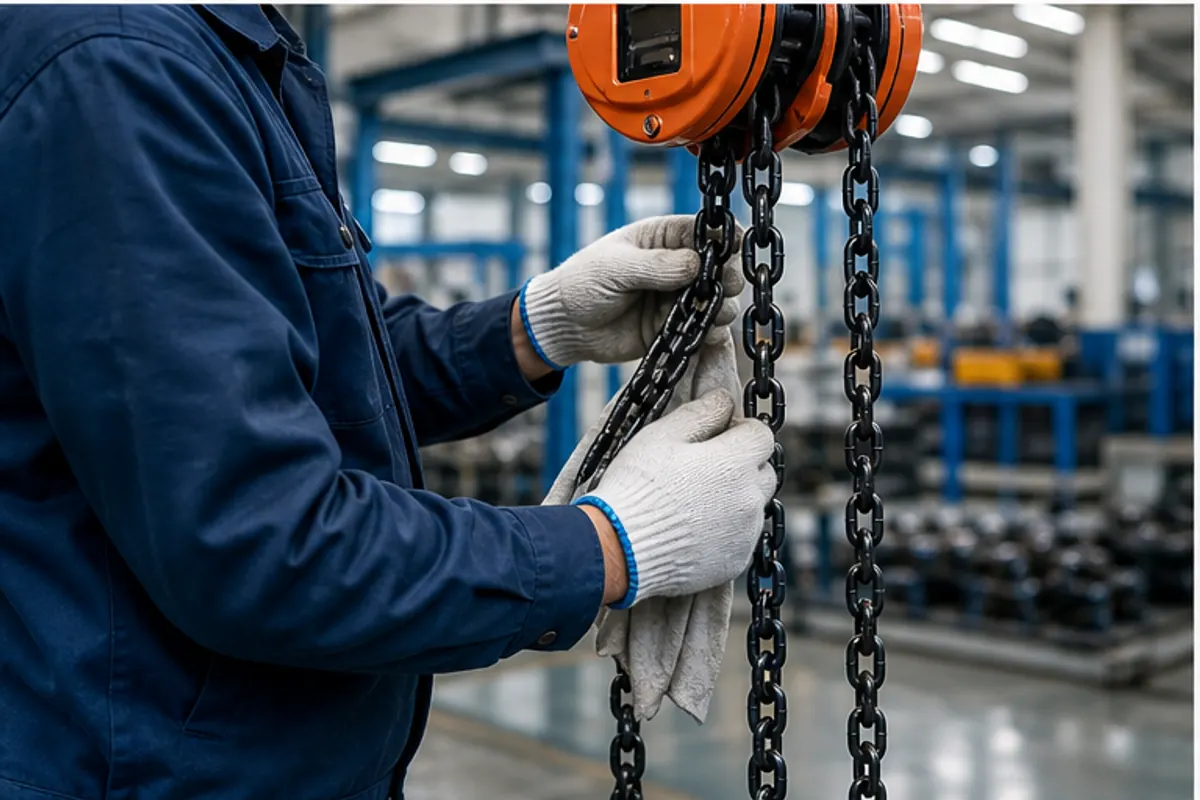
4. Keep the Chain Properly Lubricated
Correct lubrication reduces wear between chain links and helps the chain move smoothly. Use suitable chain lubricant and apply a thin, even layer. Avoid over-lubrication because excessive oil attracts dust, sand and metal chips, which can accelerate wear.
- Lubricate after cleaning the chain.
- Wipe off excessive oil before dusty work.
- Do not let lubricant reach the brake friction surface.
5. Avoid Overloading
Never exceed the rated capacity. A 1 ton chain hoist should not lift more than 1 ton, including the load, sling, fixture and any lifting accessory. Overloading may damage the chain, gears, hook and brake, even if the hoist appears to work once.
- Read the nameplate before use.
- Include the weight of rigging accessories.
- Avoid shock loading and side pulling.
6. Store the Hoist in a Dry and Clean Place
Moisture can cause rust on the chain, hook, gears and housing. After use, remove dirt, wipe the chain, and store the hoist in a dry and clean place. If the hoist will not be used for a long time, cover it against dust and moisture.
- Do not leave the hoist on wet ground.
- Keep chemicals and corrosive vapor away.
- Inspect again before returning to service.
7. When Should a Chain Hoist Be Replaced or Repaired?
A chain hoist should be repaired by qualified personnel or replaced when obvious damage is found. Warning signs include brake failure, severe load chain wear, deformed hooks, cracked housing, abnormal noise, slipping under load or missing safety parts.
- Remove damaged hoists from service.
- Use genuine replacement parts where possible.
- Record maintenance and inspection results.
Daily Chain Hoist Maintenance Table
Use this table as a simple operator checklist before lifting. For heavy-duty or frequent use, add periodic inspection by trained maintenance staff.
| Inspection Area | What to Check | Action |
|---|---|---|
| Load chain | Wear, cracks, rust, deformation, smooth movement | Clean, lubricate or remove from service if damaged |
| Hooks and latches | Hook opening, cracks, latch rebound, rotation | Replace damaged hooks or latches before lifting |
| Brake system | Light-load holding, slipping, abnormal noise | Stop use if the brake does not hold the load |
| Storage | Moisture, dust, chemical exposure | Store dry, covered and clean |
Safe Maintenance Priorities
Spend a few minutes checking the chain, hooks and latch before each shift.
Stop if the chain jams, the load slips or the hoist makes unusual noise.
Remove dust, wipe moisture and keep the hoist in a dry storage area.
Do not keep using a hoist with brake failure, severe wear or deformed hooks.
FAQ: Chain Hoist Maintenance
How often should a chain hoist be inspected?
Operators should make a visual check before each use. Formal inspection frequency depends on duty cycle, working environment and local safety rules.
Can I use oil on the load chain?
Yes, but use a suitable lubricant and apply it lightly. Too much oil attracts dust and metal chips.
Can a damaged hook be repaired by heating or bending it back?
No. A deformed or cracked hook should be replaced according to the manufacturer instructions.
Need a maintenance-friendly chain hoist?
Tell us your rated capacity, lifting height, working environment and order quantity. We can recommend manual chain hoists, lever hoists and electric chain hoists for distributor or OEM supply.