1. The Short Answer: Before Use, Periodically, and Annually
There is no single service interval that fits every hoist. A hoist used once a month in a clean maintenance room does not need the same schedule as a hoist working every day on a production line. A sensible program has three layers: a pre-use operator check, a documented frequent inspection, and a deeper periodic service by a qualified person.
Common hoist safety frameworks, including ASME B30.16 for overhead and stationary hoists, distinguish between frequent inspection and periodic inspection. Use the manufacturer manual and your local safety rules as the final authority, then make the schedule stricter when the hoist works harder.
- Pre-use check: every shift or every time the hoist is used.
- Frequent inspection: daily, weekly or monthly depending on service severity.
- Periodic service: monthly, quarterly or annually depending on service severity.
2. What Counts as Hoist Service?
Servicing a hoist is more than wiping the outside cover. A useful service routine checks the complete lifting path: suspension point, top hook, load chain or wire rope, chain wheel, gears, brake, lower hook, safety latch, controls, limit devices, labels and records. For electric chain hoists, the technician should also check the pendant, contactors, power cable, limit switch and motor condition.
A service can be simple or deep. A simple pre-use service is a visual check and light functional test. A periodic service may include cleaning, lubrication, measuring chain wear, checking brake parts, replacing worn latches, testing operation under load and updating the inspection record.
- Inspection finds visible damage and abnormal operation.
- Maintenance cleans, lubricates, adjusts and replaces wear parts.
- Testing confirms the hoist holds, lifts and lowers correctly.
3. Pre-Use Check: Every Shift or Every Lift
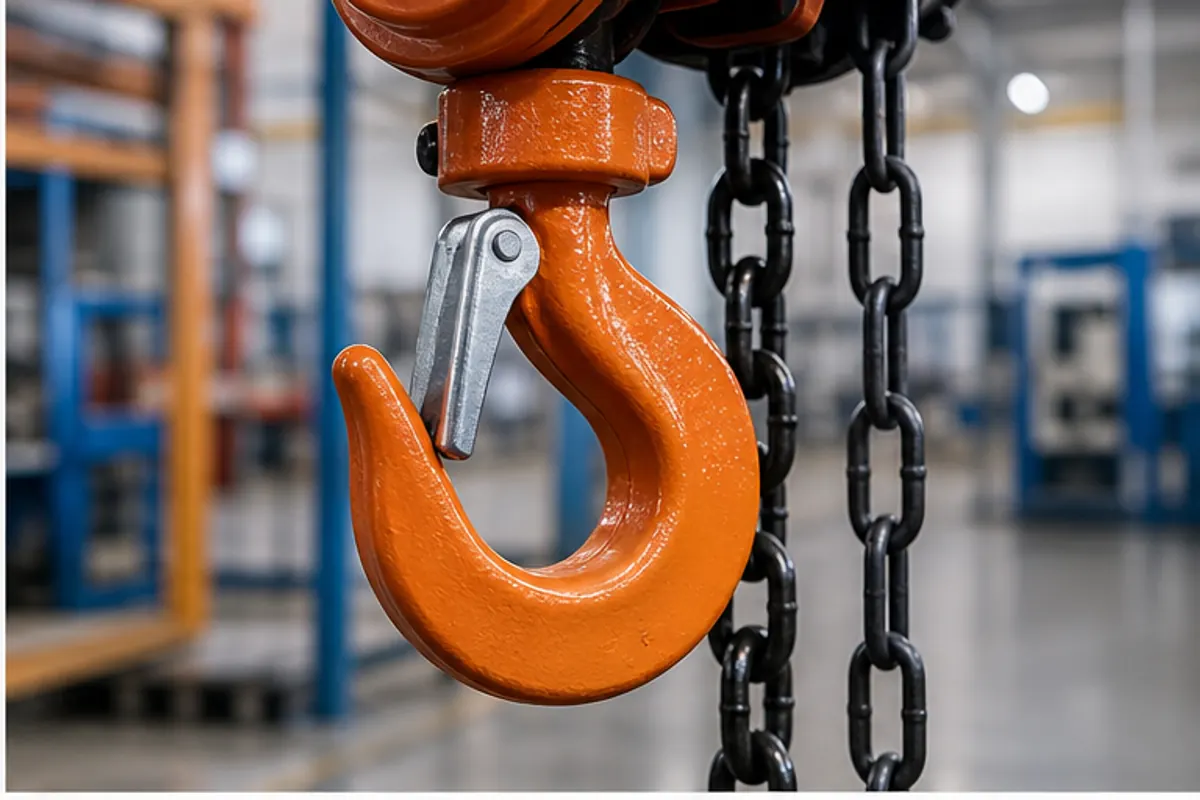
Before a load is lifted, the operator should spend a few minutes checking the hoist. Look for missing nameplates, unreadable rated capacity, damaged hooks, broken safety latches, twisted chain, corrosion, loose fasteners, oil on the brake area, abnormal chain movement or any sign that the hoist was overloaded.
Then run the hoist through a short no-load or light-load test. Lift slightly, stop, confirm the brake holds, and lower smoothly. If the load creeps down, the hand chain jumps, the motor sounds abnormal or the hook does not rotate freely, remove the hoist from service.
- Check hooks, latches, chain, housing, labels and suspension.
- Test lifting, holding and lowering before regular work.
- Never start a lift if the rated capacity is unknown.
4. Normal Service: Weekly Care and Monthly Records
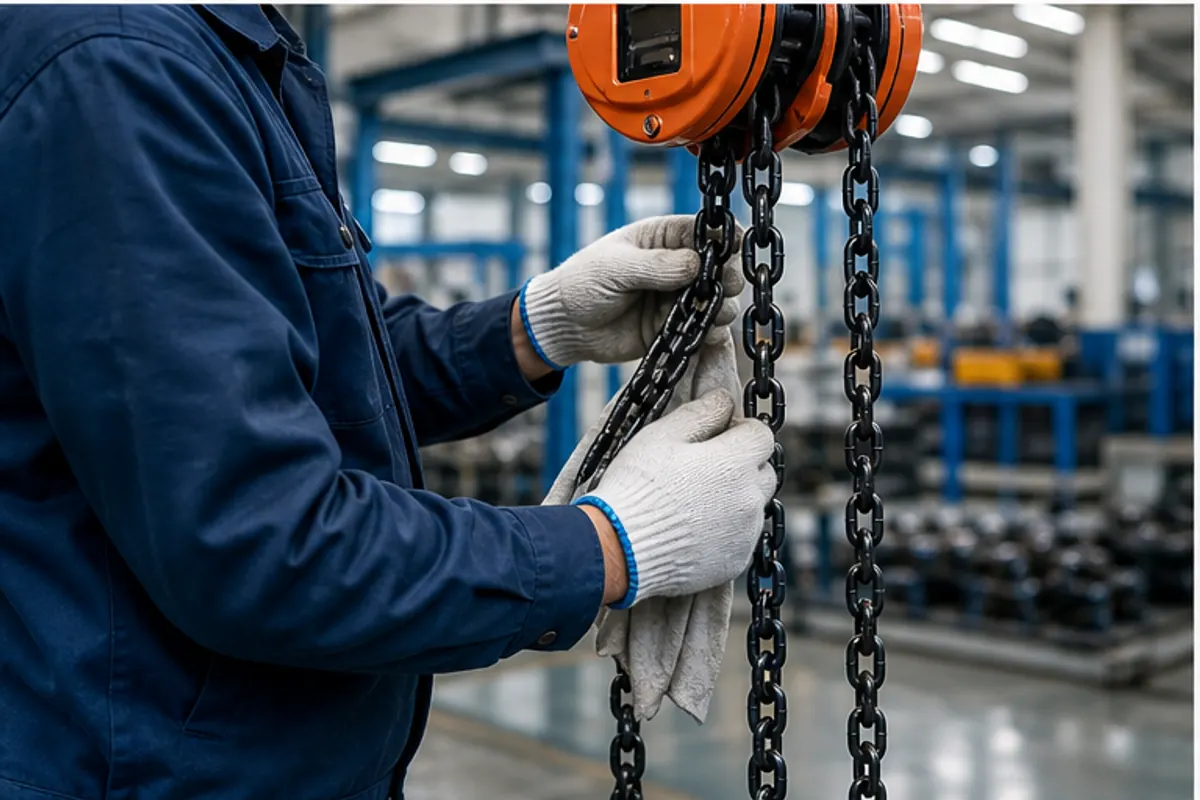
For a hoist used regularly in a clean indoor workshop, weekly care is usually enough for cleaning and lubrication. Wipe dust from the body, remove chips or dirt from the load chain, apply a thin layer of suitable chain lubricant, and confirm the brake area stays clean and dry.
A monthly documented inspection is good practice for many factories. Record the hoist ID, location, rated capacity, inspector, date, condition and any corrective action. Documentation is important because it helps maintenance teams notice repeated problems before they become failures.
- Clean the chain before lubrication.
- Lubricate lightly; excessive oil attracts dust and grit.
- Keep a written or digital inspection record for each hoist.
5. Heavy or Severe Service: Shorten the Interval
Hoists in harsh environments need more frequent service. Dust, humidity, outdoor rain, chemicals, metal chips, high temperature, frequent starts, long lifts, near-capacity loads and shift work all increase wear. In these conditions, monthly service may not be enough.
A severe-duty hoist may need daily frequent inspection, weekly lubrication checks and monthly or quarterly periodic service. If the hoist is mission-critical, keep a spare unit available so maintenance does not get skipped because production is busy.
- Increase frequency for outdoor, dusty, humid or corrosive sites.
- Increase frequency when loads are close to rated capacity.
- Increase frequency for production lines and repeated lifts.
6. Annual Service: What a Qualified Person Should Check
At least once a year for typical service, arrange a thorough inspection by qualified personnel. This is the time to measure wear, inspect internal parts where required, review records, replace damaged components and confirm the hoist is still suitable for its actual application.
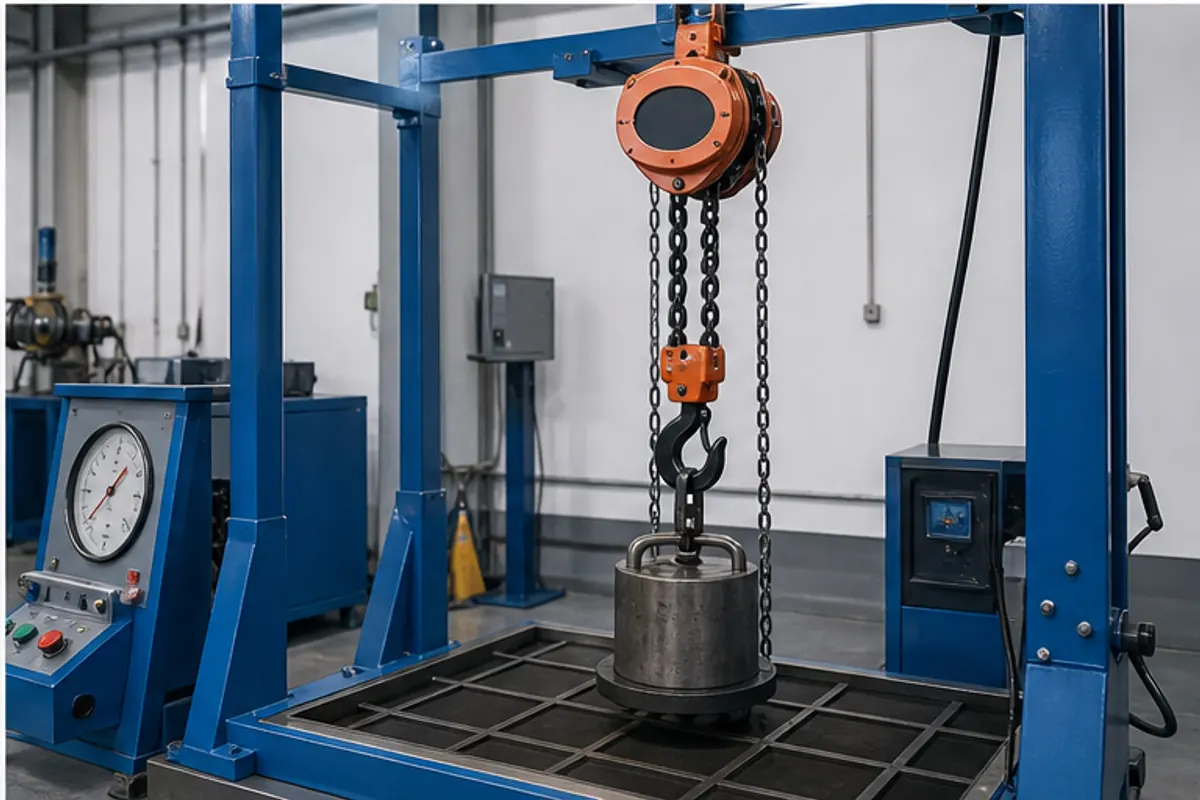
Annual service commonly includes load chain measurement, hook throat opening measurement, brake inspection, gear and bearing checks, safety latch replacement if needed, electrical control inspection for electric hoists, and a functional test. A proof load test may be required after major repair or by local rules, but it should be performed only according to the manufacturer procedure.
- Measure chain wear and hook opening against allowed limits.
- Inspect brake, gears, bearings, fasteners and suspension parts.
- Review records and decide whether the hoist should stay in service.
7. Service Immediately After Abnormal Events
Do not wait for the next planned service if something unusual happens. A hoist should be inspected immediately after overload, shock loading, side pulling, dropped load, collision, flood exposure, fire exposure, chemical contamination or long idle storage. A hoist that has been idle for months should be checked before it returns to work.
The same rule applies when operators notice symptoms: brake slip, drifting load, chain jamming, rough hand chain movement, abnormal motor noise, damaged pendant cable, missing latch, bent hook or visible cracks. Continuing to use the hoist can turn a repairable issue into a serious safety hazard.
- Tag the hoist out and stop using it until checked.
- Do not heat, weld or bend damaged hooks back into shape.
- Use correct replacement parts and follow the manufacturer manual.
8. Build a Simple Hoist Service Program
A good service program is simple enough that operators actually follow it. Give every hoist a unique ID. Keep a checklist near the work area. Train operators to recognize stop-use conditions. Keep inspection records together with repair records, spare parts history and load test documents where required.
For buyers and distributors, serviceability should also affect product selection. Clear nameplates, available spare parts, robust hooks, reliable brakes, smooth load chain and simple documentation make the hoist easier to manage over its full working life.
- Assign each hoist an ID number and service file.
- Train operators on pre-use checks and stop-use signs.
- Choose hoists with available parts and clear technical support.
Recommended Hoist Service Schedule
Use this table as a practical starting point. Always follow the manufacturer manual, local regulations and your site safety policy when they require a stricter interval.
| Service Interval | Service Type | Main Checks |
|---|---|---|
| Before each use | Operator visual and function check | Hooks, latches, chain, labels, brake holding, smooth lifting and lowering |
| Weekly | Cleaning and lubrication for regular use | Remove dirt, clean chain, lubricate lightly, check obvious wear |
| Monthly | Documented frequent inspection | Record hoist ID, condition, inspector, defects and corrective action |
| Quarterly | Service for heavy or harsh use | Dust, humidity, outdoor work, near-capacity loads or high cycle lifting |
| Annually | Thorough qualified inspection | Measure wear, inspect brake and gears, review records, repair or retire |
| Immediately | Post-incident inspection | Overload, shock load, brake slip, abnormal noise, damage or long idle storage |
How to Choose Your Service Interval
For occasional clean indoor lifting, keep the pre-use check and schedule a qualified annual inspection.
For regular workshop use, clean and lubricate weekly and document inspections monthly.
For frequent lifting or near-capacity loads, shorten service intervals and keep spare parts ready.
For dusty, wet, corrosive or production-critical work, inspect daily and service monthly or quarterly.
FAQ: Hoist Service Frequency
Is annual hoist service enough?
Annual service is a common minimum for typical use, but it is not enough for every site. Frequent use, harsh environments, near-capacity lifting or abnormal events require shorter intervals.
Who should service a chain hoist?
Operators can perform pre-use checks after training. Deeper service, repairs, brake work, electrical checks and load testing should be handled by qualified personnel following the manufacturer instructions.
Does a manual chain hoist need less service than an electric hoist?
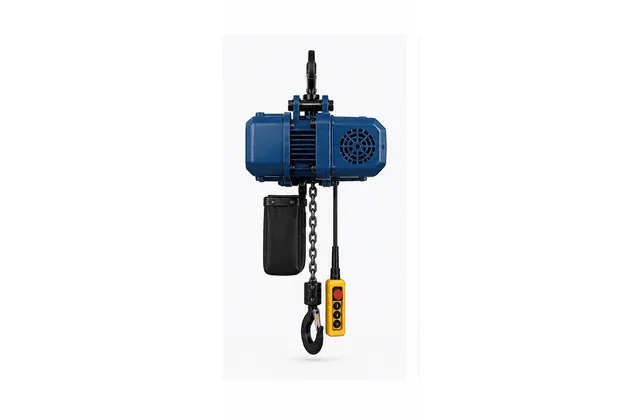
A manual hoist has fewer electrical components, but it still needs regular chain, hook, brake and gear inspection. Electric hoists also need pendant, cable, motor, contactor and limit switch checks.
Should a hoist be serviced if it has not been used?
Yes. Idle storage can still cause corrosion, lubricant aging, dust buildup or hidden damage. Check the hoist before returning it to service, especially after long storage.
What records should be kept?
Keep the hoist ID, capacity, location, date, inspector name, inspection findings, defects, repairs, replacement parts and any test results required by your site policy or local rules.
Need hoists that are easier to service?
Send us your rated capacity, lifting height, duty cycle, operating environment and order quantity. We can recommend manual, electric or lever hoists with practical service support for distributors and OEM buyers.