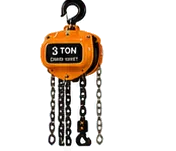
1. Start with the Real Load Weight
The rated capacity of a chain hoist must cover the full weight being lifted: the main load plus slings, hooks, lifting beams, clamps, packaging and any other below-the-hook accessories. Before requesting a quotation, record the heaviest realistic load and the exact lifting method.
- Verify weight with drawings, nameplates or scales.
- Include all fixtures and accessories.
- Use the highest expected batch weight.
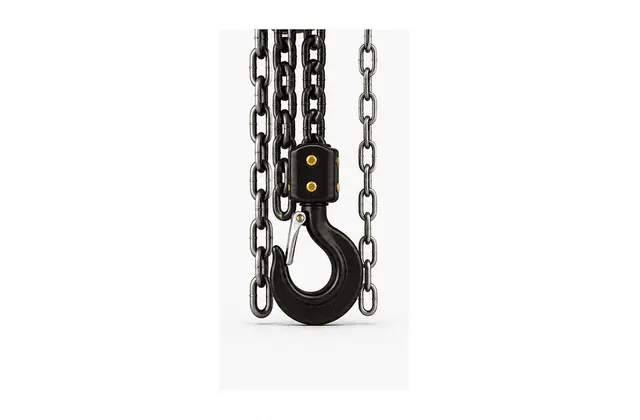
2. Understand WLL and Rated Capacity
Working Load Limit, or WLL, is the maximum load a hoist is designed to lift under specified conditions. A 2 ton chain hoist should not be used for a 2.1 ton load. Reliable manufacturers design brakes, gears, hooks and chains around the rated capacity and test the hoist before shipment.

3. Add a Sensible Safety Margin
A margin helps prevent undersizing when loads vary or when the hoist works frequently. If the normal load is 1.8 tons, a 2 ton model may be acceptable for controlled occasional lifting, while a 3 ton model can be wiser for frequent or uncertain use.
- Occasional lifting: choose the next standard size above the load.
- Frequent lifting: consider a larger capacity class or electric operation.
- Avoid shock loading, side pulling and overload use.
4. Match Hoist Type to the Job
Manual chain hoists are economical for maintenance and occasional lifting. Electric chain hoists suit production lines and repeated lifts. Lever hoists are compact tools for pulling, tensioning and positioning. Capacity selection should reflect the work rhythm, not only the load weight.
- Manual hoist: flexible, low-frequency lifting.
- Electric hoist: repeated lifting and higher productivity.
- Lever hoist: field positioning and pulling work.

5. Check Height, Headroom and Beam Conditions
Capacity is only one part of safe selection. Confirm lifting height, headroom, beam width, indoor or outdoor use, voltage for electric hoists, packaging and nameplate needs. These details allow the factory to recommend a practical model instead of only quoting the cheapest tonnage.
Practical Chain Hoist Capacity Guide
Use this table as a starting point for common industrial lifting. Final selection should always consider exact load weight, lifting method and site conditions.
| Load Range | Recommended Capacity | Typical Use |
|---|---|---|
| Up to 450 kg | 0.5T | Light maintenance, small pumps, workshop parts |
| 451-900 kg | 1T | Warehouse and machinery maintenance jobs |
| 901-1,800 kg | 2T | Molds, motors and steel parts |
| 1,801-2,700 kg | 3T | Variable loads or heavier fixtures |
| 2,701-4,500 kg | 5T | Heavy-duty manufacturing and construction |
Capacity Selection Checklist
Confirm the total lifted weight before choosing tonnage.
Repeated lifting may need electric operation or a higher class.
Check headroom, beam width, dust, humidity and power supply.
Align capacity mix, label language and packaging with local demand.
FAQ: Chain Hoist Capacity
What capacity chain hoist do I need for a 1.5 ton load?
A 2 ton chain hoist is normally the minimum suitable capacity if the total lifted weight stays below 2 tons. For frequent use, variable loads or harsh sites, a 3 ton model may be better.
Can I use a 1 ton chain hoist to lift slightly over 1 ton?
No. A chain hoist should not be used above its rated capacity or working load limit. Choose the next standard capacity and follow correct lifting practice.
Is a manual or electric chain hoist better for the same capacity?
Manual chain hoists are cost-effective for occasional lifting and sites without power. Electric chain hoists are better for repeated lifting and production environments.
Can Chain Hoist Factory customize lifting height and capacity mix?
Yes. We support OEM and ODM orders with custom lifting height, chain length, color, nameplate, packaging and product mix for distributors.
Need help choosing capacity?
Send us your load weight, lifting height, quantity and application. Our sales engineers in Qingyuan, Baoding, Hebei will recommend a practical chain hoist configuration for your market.